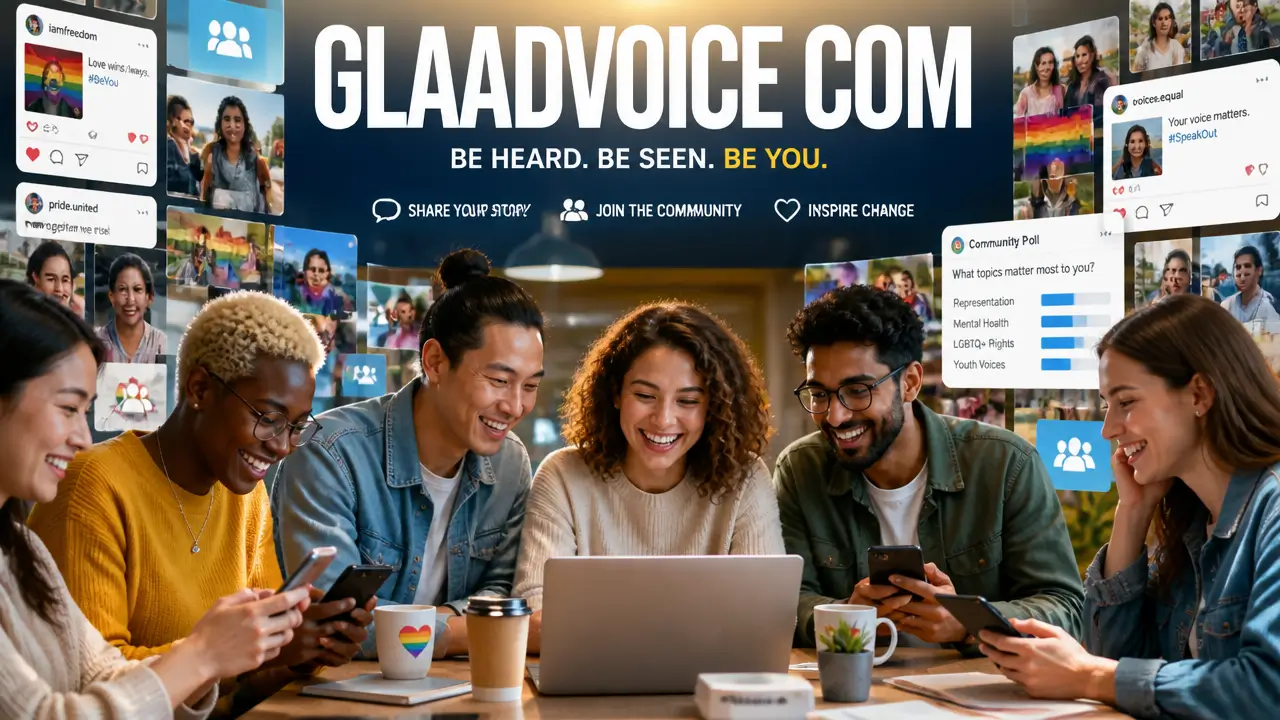
When conversations about equality, representation, and media accountability come up in today’s digital landscape, one name keeps resurfacing across communities, newsrooms, and advocacy circles alike — glaadvoice com. Whether you have encountered it through a social media campaign, a cultural commentary piece, or a discussion about the power of storytelling in driving social change, this platform occupies a meaningful space in the broader ecosystem of LGBTQ+ advocacy and public discourse. This article takes a thorough, honest, and grounded look at what glaadvoice com represents, why it matters, how it connects to the wider world of LGBTQ+ media and advocacy, and what real-world impact platforms like this have had on communities that have long fought for their stories to be told accurately and with dignity.
Understanding the Landscape: Why LGBTQ+ Advocacy Platforms Matter
Before diving into the specifics of glaadvoice com, it is important to understand the broader environment in which it operates. LGBTQ+ advocacy has evolved dramatically over the past two decades. What once depended almost entirely on grassroots organizing, print publications, and in-person rallies has now expanded into a sophisticated, multi-channel digital ecosystem where platforms, tools, and online communities work together to shape narratives, hold media accountable, and amplify voices that have historically been silenced or misrepresented.
The media landscape plays an enormous role in how LGBTQ+ people are perceived — not just by the general public, but by LGBTQ+ individuals themselves, particularly young people who are still forming their identities. Representation in film, television, journalism, advertising, and social media sends powerful signals about whose lives are considered valuable, whose stories are worth telling, and whose struggles deserve recognition. When those signals are distorted, stereotyped, or altogether absent, the consequences reach far beyond the screen.
This is the environment that made glaadvoice com relevant. It did not emerge in a vacuum. It grew out of a recognized need — a need for a centralized, credible, community-informed space where the intersection of media, culture, and LGBTQ+ identity could be examined, challenged, and celebrated.
What Is GlaadVoice Com and What Does It Stand For?
At its core, glaadvoice com is a platform deeply connected to the mission and values associated with GLAAD — one of the most recognized LGBTQ+ media advocacy organizations in the world. GLAAD, which originally stood for Gay and Lesbian Alliance Against Defamation, has long positioned itself as a watchdog, a storyteller, and a change agent within the media industry. The “voice” component of glaadvoice com signals something intentional: this is not just about monitoring media, but about amplifying the authentic voices of LGBTQ+ people and allies in a way that drives cultural change.
The platform serves as a channel for community members, advocates, journalists, and cultural commentators to engage with issues that matter most to LGBTQ+ people. Topics ranging from accurate representation in television and film to coverage of anti-LGBTQ+ legislation, crisis response, and the nuanced experiences of transgender, non-binary, intersex, and queer individuals all find space within its ecosystem.
What separates glaadvoice com from a general news or opinion site is its grounding in a specific, community-led perspective. The content and conversations hosted on or associated with the platform are shaped by people with lived experience — not just observers or commentators looking in from the outside. That distinction matters enormously in an era where performative allyship is common and genuine, community-rooted advocacy is rare.
The Power of Media Representation: Why GLAAD’s Work Is Irreplaceable
To understand why a platform like glaadvoice com carries weight, you need to understand the documented power of media representation. Year after year, research has shown that exposure to authentic, humanizing portrayals of LGBTQ+ people — in scripted television, film, advertising, and news — correlates with increased acceptance, reduced discrimination, and greater empathy among general audiences.
GLAAD has been tracking Hollywood’s representation of LGBTQ+ characters for decades through its annual Studio Responsibility Index and Where We Are on TV reports. These reports are not just statistical exercises — they are accountability tools. Studios, networks, and streaming platforms are put on record regarding how many LGBTQ+ characters appear in their content, what roles those characters play, how those characters are treated within the narrative, and whether underrepresented groups within the LGBTQ+ community — particularly transgender people and LGBTQ+ people of color — are included.
The findings from these reports have driven real conversations in boardrooms, writers’ rooms, and executive offices. When a major studio received poor marks for the way it handled a gay character’s death or for completely erasing a bisexual character from source material, those findings — amplified through platforms like glaadvoice com — created pressure that led to tangible change in subsequent productions.
This is not abstract advocacy. It is systematic, evidence-informed accountability that connects directly to how millions of people experience media every day.
Case Study: The Impact of Visibility on Youth Mental Health
One of the most compelling arguments for the work associated with glaadvoice com and GLAAD more broadly is its documented connection to LGBTQ+ youth mental health outcomes. Consider what researchers and mental health professionals have consistently found: LGBTQ+ young people who see themselves represented in media — not as punchlines, not as tragic figures, not as background characters, but as full, complex human beings — report higher self-esteem, greater sense of belonging, and lower rates of depression and suicidality.
The Trevor Project, an organization focused on LGBTQ+ youth suicide prevention, has repeatedly noted the connection between representation and psychological wellbeing. When a young person who is questioning their identity turns on a television show and sees a character who shares their experience treated with dignity and depth, it sends a message that their life has value. That message can be lifesaving — literally.
Platforms like glaadvoice com contribute to this ecosystem by pushing for more of those moments. By holding media creators accountable, by celebrating productions that get representation right, and by calling out those that fail, the platform helps shape a media landscape that is safer and more affirming for LGBTQ+ youth.
This is a real-world case study in the power of advocacy-driven media criticism. It does not require a laboratory or a controlled experiment to observe — its effects play out in the lived experiences of LGBTQ+ young people every single day.
Case Study: Transgender Representation and the Shifting Media Narrative
Another powerful example of the kind of change that advocacy tied to glaadvoice com has contributed to is the evolution of transgender representation in mainstream media. Ten years ago, transgender characters in film and television were almost universally played by cisgender actors, written as objects of curiosity or derision, and placed in narratives that centered on their gender identity as a source of conflict or comedy rather than as simply one part of a fully realized human being.
The sustained pressure from GLAAD and the broader advocacy community — amplified through platforms like glaadvoice com — contributed to a significant shift. Productions began hiring transgender actors to play transgender roles. Networks began consulting with transgender writers and cultural consultants. Stories began to reflect the actual diversity of transgender experiences, including the experiences of transgender people of color who had been almost entirely invisible in mainstream media.
This shift was not accidental. It was the result of organized, consistent, and vocal advocacy that named specific problems, proposed specific solutions, and celebrated specific examples of progress. The work connected to glaadvoice com was part of that ecosystem — providing a platform where community voices could be heard, where progress could be acknowledged, and where ongoing failures could be documented and challenged.
The broader media landscape did not change because studios spontaneously developed social consciences. It changed because advocates made the cost of inaction higher than the cost of change. That is what sophisticated, sustained advocacy looks like in practice.
Digital Activism and the Modern Advocacy Ecosystem
The rise of digital platforms has fundamentally transformed what advocacy looks like — and glaadvoice com exists squarely within this transformed landscape. Advocacy that once relied on press releases, op-eds in newspapers, and direct lobbying of network executives now unfolds in real time across social media, podcasts, email newsletters, and community forums.
This shift has created both opportunities and challenges. The opportunity is clear: advocates can now reach millions of people directly, without relying on traditional media gatekeepers who may or may not choose to amplify LGBTQ+ perspectives. A powerful story, a compelling campaign, or a piece of critical commentary can spread organically through networks of engaged community members and allies.
The challenge is equally real: the same digital landscape that empowers advocates also empowers those who seek to spread misinformation about LGBTQ+ people, to coordinate harassment campaigns against LGBTQ+ public figures, and to use algorithmic amplification to mainstream anti-LGBTQ+ rhetoric. The work of platforms associated with glaadvoice com includes navigating this complex environment — finding ways to amplify truth, counter misinformation, and support community members who face online harm.
Some of the specific ways that digital advocacy connected to glaadvoice com manifests include:
- Rapid response campaigns that mobilize community members and allies to respond to harmful media coverage or discriminatory legislation within hours of it breaking
- Storytelling initiatives that center the voices of LGBTQ+ people from marginalized communities — including transgender people of color, LGBTQ+ immigrants, LGBTQ+ people with disabilities, and LGBTQ+ seniors — whose experiences are often overlooked even within the broader LGBTQ+ advocacy space
- Media monitoring and accountability reporting that documents patterns of harmful representation and provides specific, actionable recommendations to studios, networks, and advertisers
- Community education resources that help LGBTQ+ people and allies understand their rights, access support services, and engage effectively with media and political systems
- Partnership with journalists and newsrooms to improve the accuracy and depth of reporting on LGBTQ+ issues
How GlaadVoice Com Connects to the Broader Cultural Conversation
It would be a mistake to view glaadvoice com as operating in isolation from the broader cultural and political moment. The platform exists within a context in which LGBTQ+ rights — particularly the rights of transgender people — are under sustained legislative attack in many parts of the United States and around the world. Anti-LGBTQ+ legislation targeting everything from healthcare access for transgender youth to the books that can be present in school libraries has proliferated at a pace not seen in decades.
In this environment, the work of media advocacy takes on even greater urgency. When lawmakers seek to justify discriminatory legislation, they often rely on harmful narratives about LGBTQ+ people — narratives that are frequently amplified by media outlets operating in bad faith. Countering those narratives requires not just legal advocacy or political organizing, but cultural advocacy: shaping the stories that people encounter in their daily media consumption.
This is where the work associated with glaadvoice com becomes genuinely critical. By ensuring that the dominant media narratives about LGBTQ+ people — and particularly about transgender people — are grounded in truth, humanity, and community experience rather than fear, misinformation, and stereotype, advocates create a cultural foundation that makes discriminatory legislation harder to sustain.
Public opinion on LGBTQ+ issues has shifted dramatically over the past two decades, and media representation has played a documented role in that shift. People who know an LGBTQ+ person personally are significantly more likely to support LGBTQ+ equality — but media can function as a form of “knowing” for people whose personal networks are less diverse. A well-crafted, humanizing portrayal of an LGBTQ+ character in a widely watched television show can shift attitudes in ways that decades of political messaging sometimes cannot.
The Role of Allies in Amplifying LGBTQ+ Voices
One of the strategic insights embedded in the approach associated with glaadvoice com is the recognition that building a more equitable media landscape requires more than the LGBTQ+ community advocating for itself. It requires allies — people who do not personally identify as LGBTQ+ but who understand the stakes and are willing to use their platforms, their purchasing power, and their social influence in service of equality.
Effective ally engagement looks different depending on the context. For a consumer, it might mean making intentional choices about which media to watch, stream, and financially support — choices informed by accountability reporting that distinguishes between productions that invest genuinely in LGBTQ+ representation and those that engage in what advocates call “rainbow washing,” superficial gestures of inclusion designed to attract LGBTQ+ audiences without actually centering LGBTQ+ stories or investing in LGBTQ+ talent.
For a journalist or media professional, ally engagement might mean proactively seeking out LGBTQ+ sources and experts, using accurate and respectful language when covering LGBTQ+ topics, consulting community guidelines before publishing stories that touch on sensitive aspects of LGBTQ+ experience, and advocating within their own newsrooms for more robust and accurate LGBTQ+ coverage.
For advertisers and brands, genuine ally engagement means more than placing a rainbow logo on products during Pride Month. It means making sustained financial commitments to LGBTQ+ media, pulling advertising from outlets that consistently spread anti-LGBTQ+ misinformation, and ensuring that LGBTQ+ people are authentically represented in brand campaigns throughout the year — not just during designated awareness months.
Platforms like glaadvoice com serve all of these audiences by providing the information, accountability reporting, and community voice needed to make informed decisions about how to show up as an effective ally.
What Authentic Storytelling Actually Looks Like
A recurring theme across the work connected to glaadvoice com is the distinction between authentic storytelling and tokenistic representation. This distinction is not always immediately obvious to people outside the LGBTQ+ community, but it is deeply felt by those within it.
Authentic storytelling means that LGBTQ+ characters exist as full human beings whose sexual orientation or gender identity is one part of who they are, not the totality of their narrative. It means that LGBTQ+ characters experience joy, adventure, humor, romance, professional achievement, and personal growth — not just struggle, discrimination, and tragedy. It means that the diversity within the LGBTQ+ community is reflected, acknowledging that the experience of a white, cisgender gay man in a major metropolitan area is fundamentally different from the experience of a Black transgender woman in a rural community or a bisexual Latina navigating family dynamics shaped by cultural expectations.
Tokenistic representation, by contrast, involves including one LGBTQ+ character as a symbolic gesture — often a character who exists primarily to serve the narrative needs of non-LGBTQ+ characters, whose own story is rarely centered, and who frequently meets a tragic end or simply disappears from the narrative once their symbolic function has been served.
The distinction matters because audiences — particularly LGBTQ+ audiences — can feel it. Tokenistic representation does not produce the same psychological and social benefits as authentic representation. It can, in fact, cause harm by reinforcing the sense that LGBTQ+ lives are peripheral rather than central, tragic rather than full, and tolerated rather than celebrated.
Here is what authentic LGBTQ+ storytelling typically includes:
- Characters whose identities are explored with nuance and specificity, reflecting the actual diversity of LGBTQ+ experience
- Narratives in which LGBTQ+ characters experience growth, connection, and triumph — not just persecution and loss
- Creative teams that include LGBTQ+ writers, directors, producers, and consultants who can bring authentic perspective to the work
- Consultation with LGBTQ+ community organizations and advocacy groups during the development process
- Commitment to accuracy in portraying aspects of LGBTQ+ experience that are frequently misrepresented, including the experiences of transgender people, bisexual and pansexual people, and LGBTQ+ people from marginalized racial, ethnic, and religious communities
Case Study: When Advocacy Changes the Room — The Writers’ Room
One of the less visible but enormously impactful areas where the advocacy associated with glaadvoice com has contributed to change is within the writers’ rooms of major television productions. For decades, LGBTQ+ characters were written primarily by people who had no personal connection to LGBTQ+ experience. The results were often well-intentioned but deeply flawed — characters whose dialogue, behavior, and inner lives felt hollow or stereotyped to LGBTQ+ audiences even when they appeared progressive to general audiences.
The sustained advocacy for LGBTQ+ inclusion behind the camera — not just in front of it — has contributed to a meaningful shift. More LGBTQ+ writers are working in television today than at any previous point in the medium’s history. Productions are consulting with LGBTQ+ advocacy organizations during development rather than after the fact. The stories being told are more textured, more specific, and more reflective of community experience as a result.
This change did not happen because studios decided independently that diversity behind the camera was a worthy goal. It happened because advocates — using platforms and channels associated with glaadvoice com and the broader GLAAD ecosystem — made the case consistently, publicly, and persuasively that authentic storytelling required authentic storytellers. They tracked data, they named specific productions that were failing, they celebrated productions that were succeeding, and they created a framework of accountability that made LGBTQ+ inclusion behind the camera a legitimate industry priority.
Intersectionality and the Fight for Complete Representation
Any serious discussion of the work connected to glaadvoice com must acknowledge the issue of intersectionality — the recognition that LGBTQ+ identity does not exist in isolation from other aspects of identity, and that the challenges faced by LGBTQ+ people are shaped by the intersection of sexual orientation and gender identity with race, ethnicity, class, disability, religion, immigration status, and other dimensions of experience.
The LGBTQ+ advocacy space has not always done justice to this complexity. For much of its history, mainstream LGBTQ+ advocacy focused disproportionately on the experiences of white, cisgender, middle-class gay and lesbian people — a focus that left transgender people, LGBTQ+ people of color, LGBTQ+ people with disabilities, and other multiply marginalized communities feeling invisible within the very movement that was supposed to represent them.
More recent advocacy associated with platforms like glaadvoice com has worked to address this gap. There is greater emphasis today on the specific, often acute challenges faced by LGBTQ+ people of color — who face discrimination not just on the basis of sexual orientation or gender identity, but also on the basis of race and ethnicity. There is greater attention to the experiences of transgender women of color, who face epidemic levels of violence that receive far too little media attention. There is greater recognition that the experiences of LGBTQ+ immigrants, LGBTQ+ people in rural communities, and LGBTQ+ people navigating religious environments deserve space and voice within the broader advocacy conversation.
This evolution reflects a more mature understanding of what genuine advocacy requires — and it is an evolution that platforms like glaadvoice com have helped to drive by centering diverse voices and refusing to treat the LGBTQ+ community as a monolith.
The Future of LGBTQ+ Media Advocacy
Looking ahead, the work associated with glaadvoice com faces both encouraging signs and significant challenges. On the encouraging side, LGBTQ+ representation in mainstream media has genuinely improved over the past decade. More LGBTQ+ characters appear in more productions, playing more diverse roles, with more authentic storytelling than at any previous point. Streaming platforms have created space for LGBTQ+-centered stories that might never have found a home in traditional broadcast television. Social media has given LGBTQ+ voices direct access to public discourse in ways that bypass traditional gatekeeping.
At the same time, the political environment presents serious challenges. As legislative attacks on LGBTQ+ rights — particularly transgender rights — intensify in many parts of the country, the risk of a cultural backlash that reverses media progress is real. Some networks and studios that made visible commitments to LGBTQ+ inclusion have quietly scaled back those commitments in response to political pressure. The phenomenon of “rainbow washing” — performative inclusion gestures that substitute for genuine commitment — remains a persistent problem.
The role of platforms like glaadvoice com in this environment is, if anything, more important than ever. Sustained, informed, community-rooted advocacy is the counterweight to both political regression and corporate performativity. It provides the accountability infrastructure that keeps media institutions honest, the community voice that ensures advocacy remains grounded in lived experience, and the narrative framework that helps the broader public understand what is actually at stake.
How You Can Engage with the GlaadVoice Com Ecosystem
If you are reading this article as someone who wants to engage more meaningfully with the work associated with glaadvoice com and LGBTQ+ media advocacy, there are practical ways to do so regardless of where you are starting from.
For LGBTQ+ community members, engagement means using your voice — sharing your stories, participating in community initiatives, and providing feedback to media creators and advocacy organizations about what authentic representation looks like from your perspective.
For allies, engagement means doing the work of learning — reading the accountability reports, understanding the history of LGBTQ+ representation in media, making intentional media consumption choices, and using your own platforms and networks to amplify LGBTQ+ voices and perspectives.
For media professionals — journalists, writers, directors, producers, casting directors — engagement means committing to the professional standards of accuracy, consultation, and authentic storytelling that the advocacy community has articulated clearly and publicly.
For brands and advertisers, engagement means moving beyond performative gestures toward sustained, meaningful investment in LGBTQ+ media, talent, and storytelling.
The work is ongoing, it is urgent, and it requires all of these forms of engagement working together. Platforms like glaadvoice com exist to facilitate exactly that kind of broad, sustained, community-rooted engagement.
Frequently Asked Questions (FAQs)
What is glaadvoice com and who is it for?
Glaadvoice com is a platform connected to GLAAD’s broader mission of LGBTQ+ media advocacy and cultural change. It is designed for community members, allies, media professionals, journalists, and anyone who wants to engage with issues of LGBTQ+ representation, media accountability, and advocacy. It is particularly valuable for people who want to understand how media shapes public attitudes about LGBTQ+ people and what can be done to make media more accurate, authentic, and affirming.
How does GLAAD hold media accountable for LGBTQ+ representation?
GLAAD uses a combination of annual reporting, direct engagement with studios and networks, public accountability campaigns, and community mobilization to drive improvements in LGBTQ+ representation. Reports like the Studio Responsibility Index and Where We Are on TV track quantitative and qualitative representation data and put specific productions and companies on record regarding their inclusion practices.
Why does LGBTQ+ representation in media matter so much?
Research consistently shows that media representation shapes public attitudes, affects the mental health and wellbeing of LGBTQ+ individuals (particularly youth), and influences the cultural environment in which policy debates about LGBTQ+ rights take place. Authentic representation has been linked to increased acceptance, reduced discrimination, and better mental health outcomes for LGBTQ+ people.
What is the difference between authentic representation and tokenistic representation?
Authentic representation involves LGBTQ+ characters who are fully developed, whose identities are explored with nuance, and whose stories reflect the genuine diversity of LGBTQ+ experience. Tokenistic representation involves superficial inclusion gestures — a single LGBTQ+ character who exists primarily as a symbol rather than a fully realized human being. The distinction matters because authentic representation produces real social benefits while tokenistic representation can actually reinforce the marginalization it appears to address.
How can I support LGBTQ+ media advocacy as an ally?
Allies can support LGBTQ+ media advocacy by making intentional media consumption choices informed by accountability reporting, using their platforms and networks to amplify LGBTQ+ voices, advocating within their professional environments for more authentic LGBTQ+ representation, supporting brands and advertisers that make genuine (not performative) commitments to LGBTQ+ inclusion, and staying informed about the legislative and cultural threats facing LGBTQ+ communities.
What role does intersectionality play in LGBTQ+ media advocacy?
Intersectionality is central to modern LGBTQ+ media advocacy because the experiences of LGBTQ+ people are shaped by the intersection of sexual orientation and gender identity with race, ethnicity, class, disability, religion, and other aspects of identity. Effective advocacy must reflect this complexity — not treating the LGBTQ+ community as a monolith, but actively centering the voices and experiences of LGBTQ+ people from multiply marginalized communities who have often been overlooked even within the broader advocacy space.
What are the biggest challenges facing LGBTQ+ media advocacy today?
The biggest challenges include the intensification of legislative attacks on LGBTQ+ rights (particularly transgender rights) that create political pressure on media companies to scale back inclusion commitments, the persistent problem of “rainbow washing” by brands and media companies that engage in performative gestures without genuine commitment, the need to expand representation to reflect the full diversity of LGBTQ+ experience (including the experiences of transgender people, LGBTQ+ people of color, and other marginalized groups), and the challenge of navigating a digital media landscape where misinformation about LGBTQ+ people can spread rapidly and widely.
How has transgender representation specifically evolved in mainstream media?
Transgender representation has undergone significant evolution, driven in large part by sustained advocacy from organizations like GLAAD. Ten years ago, transgender characters in mainstream media were almost universally played by cisgender actors and written as objects of curiosity or derision. Today, while significant work remains to be done, more transgender actors are being cast in transgender roles, more productions are consulting with transgender writers and cultural experts, and more stories reflect the genuine complexity and humanity of transgender experience. This shift was not accidental — it was the direct result of organized, sustained advocacy that named specific problems and proposed specific solutions.
Conclusion
The work represented by glaadvoice com is not peripheral to the broader struggle for LGBTQ+ equality — it is central to it. Media shapes culture, culture shapes attitudes, and attitudes shape policy. An advocacy ecosystem that holds media accountable, amplifies community voices, and pushes for authentic storytelling is not engaged in a soft or secondary form of activism. It is engaged in one of the most consequential forms of advocacy available in the modern world.
The case studies examined in this article — from the documented impact of representation on youth mental health to the evolution of transgender storytelling in mainstream media to the shift toward more diverse LGBTQ+ writers in television — all point to the same conclusion: sustained, sophisticated, community-rooted media advocacy works. It does not work overnight, and it does not work without consistent effort, but it works.
Whether you come to glaadvoice com as an LGBTQ+ community member seeking validation and community, as an ally seeking to understand how to show up more effectively, as a media professional seeking guidance on authentic storytelling, or simply as a curious reader seeking to understand why this work matters, the platform offers something valuable: a grounded, community-informed perspective on one of the most important cultural conversations of our time.
The fight for LGBTQ+ equality is fought on many fronts — in courtrooms, in legislatures, in community organizations, and on the streets. But it is also fought in living rooms, movie theaters, and on streaming platforms, one story at a time. That is the front that glaadvoice com holds — and it is one worth understanding, supporting, and engaging with fully.
For More Visits: Voguemag

